


Are you looking for a new way to get moving? Forget boring exercises. A lively dance workout can transform your fitness journey. It brings joy and rhythm right into your living space.
This style of movement has become incredibly popular. You don’t need a gym membership or fancy gear. All you need is a little space and a willingness to have fun.
The vibrant beats of Afrobeat music create a unique energy. This makes your exercise session feel like a celebration. It’s a fantastic way to combine cardio, strength training, and pure enjoyment.
Our guide is designed for everyone. Whether you’re a seasoned mover or just starting out, you can join in. We will walk you through everything from simple steps to more advanced combinations.
Get ready to boost your heart health, tone muscles, and improve your mood. Let’s dive into this exciting and effective fitness practice.
Key Takeaways
- Dance workouts offer a fun and effective alternative to traditional gym sessions.
- You can achieve a great fitness level without expensive equipment or memberships.
- The rhythmic energy of this music genre turns exercise into an uplifting experience.
- This guide is suitable for all skill levels, from beginners to advanced participants.
- Expect benefits like improved cardiovascular health, muscle conditioning, and mental well-being.
- At-home fitness routines provide flexibility for busy schedules.
Introduction to Afrobeat Dance Workouts
Imagine transforming your exercise time into a cultural celebration that energizes both body and spirit. This movement style draws from West African traditions, particularly the vibrant cultures of Nigeria and Ghana.
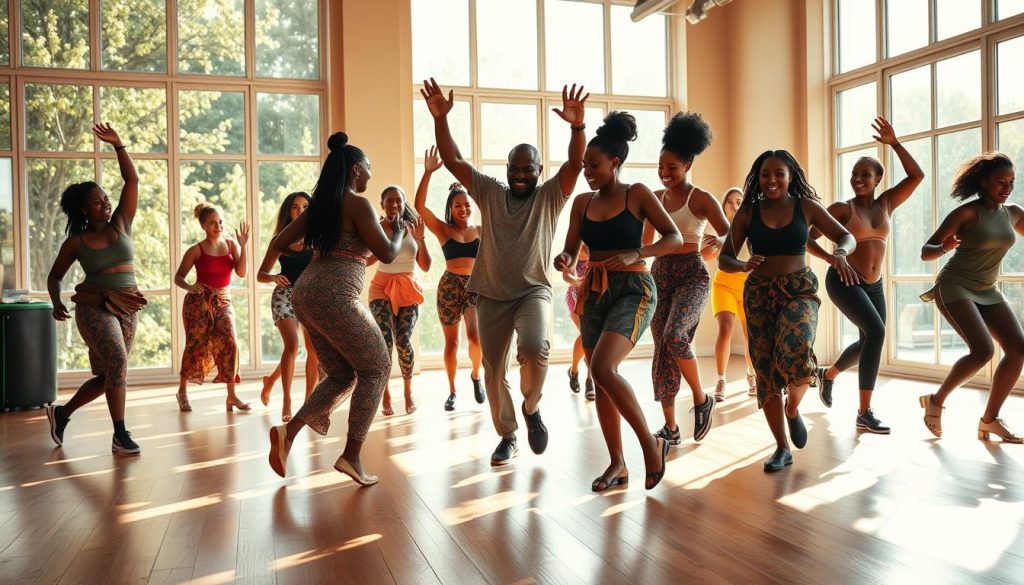
The music features infectious rhythms and percussive beats that naturally get your heart pumping. These energetic melodies create the perfect backdrop for cardio exercise that doesn’t feel like work.
Many people are discovering this as a refreshing alternative to traditional gym sessions. The approach offers serious health benefits while bringing emotional joy to your fitness journey.
What makes this one of the best dance workouts try is its accessibility. Movements can be easily modified, making every class suitable for beginners and experienced participants alike.
You’re not just exercising – you’re connecting with a rich musical heritage. The experience balances pure fun with effectiveness, creating a sustainable fitness solution that keeps you coming back for more.
Get Started: Preparing Your Home for a Dance Workout
Ready to transform your living area into a personal fitness studio? Proper preparation makes your movement sessions safer and more enjoyable.
Setting Up Your Space
Clear at least 6×6 feet of floor space to move freely. Good ventilation keeps the air fresh during your activity.
Choose a surface that provides stability. Avoid slippery floors and consider using a yoga mat for cushioning on hard surfaces.
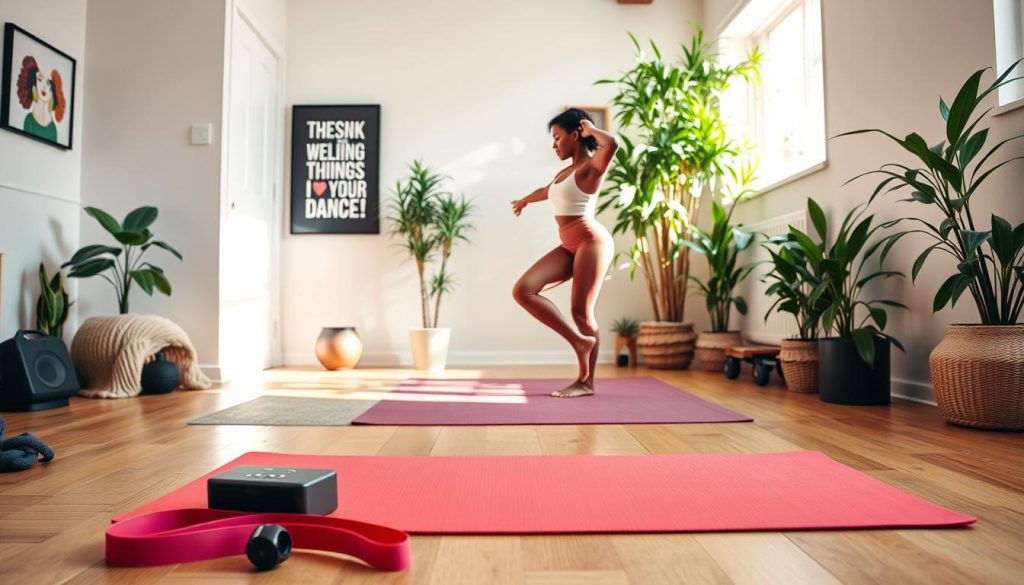
Keep essential items nearby: a water bottle, towel, and your device for following instructional videos. Wear comfortable clothing that allows full range of motion.
Essential Warm-Up Techniques
Always prepare your muscles before beginning any physical activity. A proper warm-up helps prevent injuries and gets your body ready.
Spend 5-10 minutes on gentle movements. Try neck rolls, shoulder circles, and arm swings to loosen up.
Add hip rotations and gentle leg stretches to complete your preparation. This routine increases blood flow and raises your body temperature.
Making warm-ups part of your daily practice helps transition into exercise mode. This approach makes your session more effective and enjoyable every time.
Afrobeat dance workout routine at home
Discover how to channel West African energy through simple yet effective movements. This practice blends traditional rhythms with modern fitness principles for a truly unique experience.
Understanding the Afrobeat Vibe
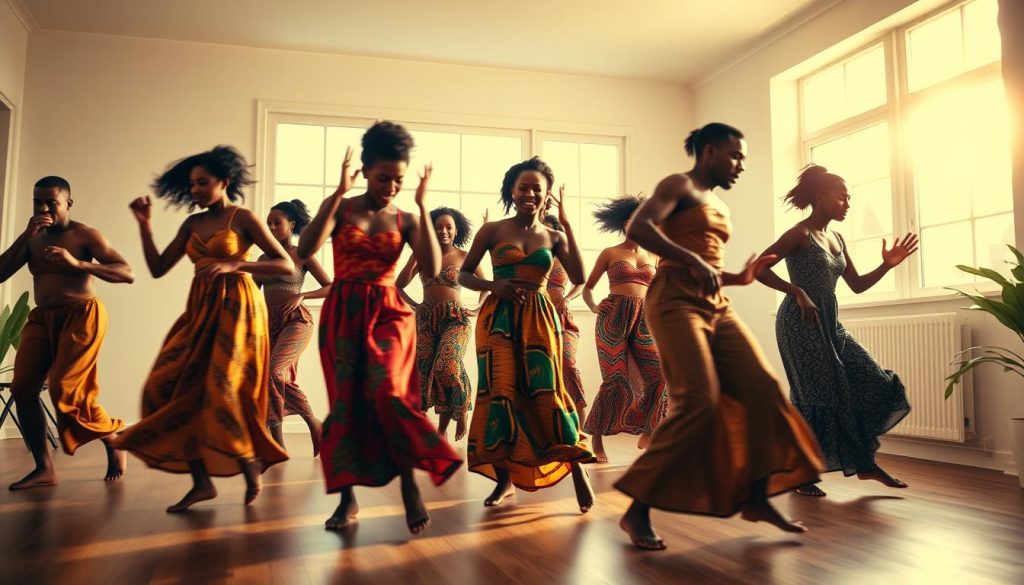
The essence of this style comes from grounded, earthy movements. There’s strong emphasis on hip isolations and precise footwork.
This creates full-body rhythmic expression that connects you deeply to the music. The fusion of African traditions with contemporary influences results in a high-energy, athletic style.
The hips become your primary instrument for creating rhythm. This focus on lower body strength means you’ll develop powerful legs and stable footing.
Key Moves for Beginners
Start with foundational steps that build confidence. The “Shoki” involves bouncing with bent knees to feel the beat.
Try basic hip rolls and shoulder shimmies to loosen up. The “Zanku” combines legwork with hip movements for coordination.
A typical 15-minute session includes 2 minutes of warm-up, 10 minutes of core movements, and 3 minutes of cool-down. This structure provides excellent cardiovascular benefits while toning legs, glutes, and core.
Remember: proper form matters more than speed. This medium-intensity approach makes it perfect for newcomers to challenge themselves safely.
Amp Up Your Cardio with Dance Moves
Elevate your fitness journey by turning rhythmic movement into powerful cardiovascular exercise. This approach makes getting your heart rate up feel like pure enjoyment rather than hard work.
Boosting Your Heart Rate Naturally
Continuous rhythmic activity naturally elevates your cardiovascular system. When you move to the beat, your body responds by increasing circulation.
This gets your heart pumping into the optimal zone for fat burning. The science is simple: sustained movement requires more oxygen, which makes your heart work harder.
You’ll notice your heart rate climbing as you maintain the rhythm. This creates excellent cardiovascular benefits without the monotony of traditional exercise.
Calorie-Burning Dance Sequences
Try this effective sequence to maximize calorie burn. Start with one minute of fast-paced stepping movements.
Follow with thirty seconds of light jumps. Then continue with one minute of continuous hip circles.
Take thirty seconds for recovery with gentle steps. Repeat this cycle three to four times for maximum effect.
This full-body approach targets your legs, core, and arms simultaneously. A typical session can burn 300-500 calories while improving endurance.
The interval-style format provides natural high-intensity training. You’ll get comprehensive fitness benefits from this enjoyable movement practice.
Explore Diverse Dance Styles for Your Routine
Adding variety to your physical activity keeps both mind and body engaged. Different cultural movement traditions offer unique benefits that complement each other beautifully.
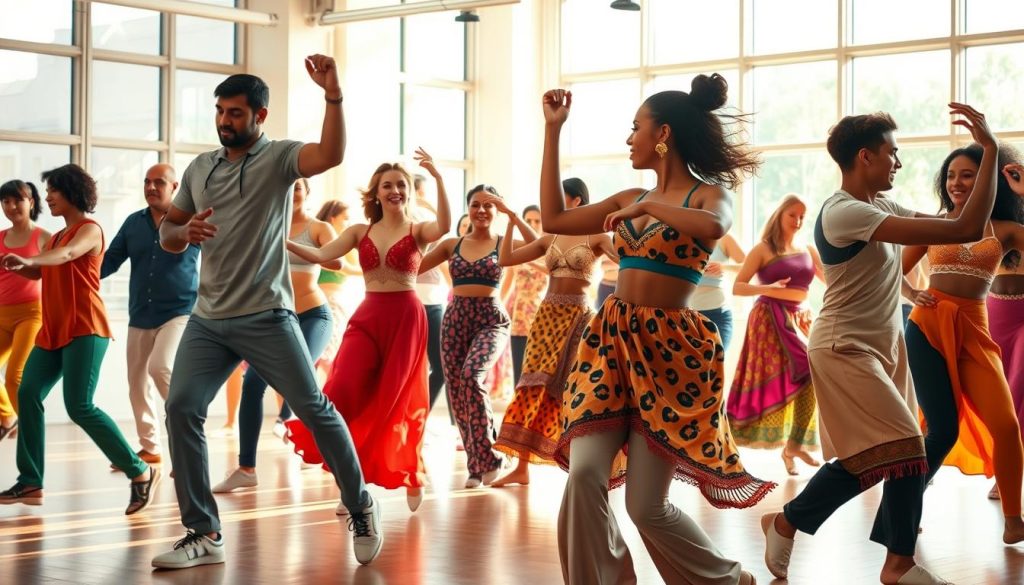
Hip-Hop, Bollywood, and Belly Dance
Hip-hop sessions build power through sharp, grounded movements. These workouts develop excellent coordination and explosive strength.
Bollywood dance combines graceful arm work with energetic foot patterns. The Muqabla routine and Dance with Deepti’s beginner class make this style accessible for all levels.
Belly dancing focuses on body isolations and hip movements. Signature techniques include hip drops, shimmies, and figure eights that strengthen your core.
How Different Moves Improve Fitness
Each style targets specific muscle groups for comprehensive results. Hip-hop builds lower body power, while Bollywood improves flexibility and endurance.
Exploring various workouts prevents boredom and challenges your body in new ways. Watching video demonstrations helps you find the best dance class for your interests.
This approach creates well-rounded fitness benefits while keeping your practice fresh. You’ll discover which movements resonate most with your personal goals.
Step-by-Step Guide to Perfecting Dance Moves
The journey to fluid movement begins with patience and attention to the fundamentals of technique. Building your skills effectively means understanding how to progress safely while maintaining proper form throughout your practice.
Starting Slow and Gradually Increasing Intensity
If you’re new to this activity, it’s crucial to start slow and gradually build your confidence. Begin with simplified versions of basic steps before attempting complex patterns. This approach helps your body adapt without overwhelming your system.
Most instructional videos demonstrate moves at reduced speed before building to full tempo. Take advantage of this by repeating sections until you feel comfortable. This method prevents injury while building essential muscle memory.
Focusing on Form and Technique
Proper alignment protects your joints and ensures effective muscle engagement. Keep knees slightly bent, engage your core for stability, and let your hips initiate movements rather than forcing from your legs.
Practice in front of a mirror to check your positioning. For hip rolls, imagine drawing circles with your hip bone. For shoulder movements, keep arms relaxed and let the action come from rapid contractions. This attention to detail makes your practice more effective over time.
Incorporating HIIT into Your Dance Workouts
Boost your exercise efficiency dramatically by combining the power of HIIT with joyful movement patterns. High-Intensity Interval Training alternates intense bursts with brief recovery periods. This creates an effective fat-burning session that maximizes results.
High-Intensity Dance Sequences
A 20-minute session might include 30 seconds of explosive jump-and-twist exercises. Follow this with rapid hip thrusts and burpee variations with creative flair. These intense movements get your heart rate elevated into the anaerobic zone.
Your heart will pump at 85-95% of its maximum capacity. This triggers EPOC (excess post-exercise oxygen consumption). Your body continues burning calories long after you finish.
Balancing Cardio with Strength Training
Instructor Jamie cues sequences that blend cardio with toning moves. Squat-based patterns work legs and glutes while plank variations build core strength. Standing oblique crunches with hip movements target multiple muscle groups.
Dianne Buswell’s 45-minute Jive HIIT demonstrates how challenging these sessions can be. The benefits include improved cardiovascular fitness and enhanced muscle tone throughout your body. Always warm up properly and maintain good form for safety.
Dance Workouts for Every Fitness Level
The beauty of rhythmic fitness lies in its universal accessibility across all experience levels. Whether you’re completely new to movement or have years of practice, there’s a perfect starting point for your journey.
Beginner-Friendly Routines
Newcomers should seek out sessions specifically designed for their level. Look for programs labeled “newbie” that start slow gradually with basic patterns.
A 20-minute session introduces multiple styles like Hustle, Salsa, and Cha-Cha. This approach gives beginners diverse exposure without overwhelming complexity.
The key is finding fun sessions with clear instruction and built-in warm-ups. Don’t worry about perfect form—focus on continuous movement and take breaks when needed.
Challenging Variations for Advanced Dancers
Experienced movers can elevate their practice with intricate combinations. Advanced sessions incorporate jumps, complex footwork, and full choreography.
Progress your routine by increasing session duration from 20 to 45 minutes. Combine multiple styles in one class for comprehensive body conditioning.
This progression way ensures your workouts remain engaging while challenging different muscle groups. Each time you practice, you’ll discover new opportunities for growth.
Synchronizing Music with Movement
The right soundtrack transforms your exercise session from ordinary to extraordinary. Music provides the heartbeat that guides your physical expression.
Rhythm becomes your natural metronome, helping your body flow through sequences effortlessly. This synchronization makes choreography feel intuitive rather than forced.
Choosing the Right Tracks
Select songs with strong percussive beats between 120-130 BPM for learning. Increase to 130-145 BPM tracks for high-intensity segments.
Artists like Burna Boy and Wizkid offer perfect energy for movement. Their infectious rhythms naturally elevate your heart rate.
Creating a Motivational Playlist
Structure your soundtrack like a class: warm-up songs, high-energy tracks, then cool-down melodies. This progression supports your body’s natural rhythm.
Mix traditional sounds with contemporary Afro-fusion for variety. Discovering which music styles energize you most keeps your practice fresh.
Let the music inspire your movements rather than dictate them. This approach turns exercise into celebration, making you eager for each session.
Tips for Maintaining a Consistent Dance Workout Routine
Maintaining momentum in your physical activity journey can be challenging, but with the right approach, it becomes second nature. The key to lasting results lies in developing habits that keep you engaged and motivated through every season.
Remember that regular practice matters more than perfection in any single session. Consistency builds skill naturally over time, so focus on showing up regularly rather than mastering moves immediately.
Staying Motivated Day to Day
Schedule your movement sessions at the same time each day to build strong habits. Morning practice can be particularly effective for starting your day with energy and positive vibes.
Begin with realistic commitments—three 20-minute sessions weekly works well for newcomers. As your comfort grows, gradually increase to 4-5 sessions. This steady progression helps prevent burnout.
Track your progress and celebrate small victories along the way. Mastering a new move or completing a full week of sessions deserves recognition. These achievements provide motivation to continue.
When you miss a day, simply return to your plan without guilt. One skipped session doesn’t derail your entire routine. The ability to help get yourself back on track is what separates temporary efforts from lasting success.
Health Benefits of a Dance Workout
Engaging in musical activity delivers a powerful combination of physical and mental rewards. The health benefits extend far beyond simple calorie burning, touching every aspect of your well-being.
Cardiovascular and Core Strength Improvements
Regular movement sessions help get heart rate elevated into the optimal zone. This strengthens your heart muscle and improves circulation throughout your body.
The constant stabilization required during rhythmic activity builds impressive core strength. Movements that involve rotation and balance directly engage your abdominal muscles.
Your legs receive excellent conditioning through repetitive motions. Squatting patterns and footwork build strength in multiple muscle groups.
Beyond the physical benefits, this way of moving releases natural mood elevators. The social connection, even virtually, reduces feelings of isolation.
Research shows this activity combines multiple health advantages efficiently. Few other exercises match its comprehensive approach to wellness.
Mix It Up: Combining Dance with Traditional Workouts
Want to take your fitness results to the next level? Cross-training offers a smart way to maximize your progress while keeping things fresh and exciting.
The Benefits of Cross-Training
Alternating your dancing sessions with strength workouts creates balanced development. This approach prevents overuse injuries common in repetitive movements.
Your exercise routine becomes more comprehensive. While rhythmic movement provides excellent cardio, traditional strength training builds muscle mass and bone density.
A balanced weekly schedule might include three days of dancing, two strength workouts, one flexibility day, and one rest day. This variety addresses muscle imbalances effectively.
The mental benefits are equally important. Changing your exercise type prevents boredom and keeps you engaged. You’ll discover new passions while maintaining your favorite activities.
Practical integration is simple. Add ten minutes of core work after your movement sessions. Use online resources for guidance when trying new exercise types.
Schedule different activities at various times of the day based on your energy levels. This smart approach enhances performance and creates sustainable fitness habits.
Conclusion
The journey toward sustainable fitness begins when you find an activity that brings genuine joy to your daily routine. This movement practice combines physical benefits with mental refreshment in a unique way.
Starting requires no special equipment or gym membership. Just some space and your favorite music. The rhythmic approach makes every session feel like celebration rather than exercise.
Remember that progress comes through consistency, not perfection. Begin with simple moves and build confidence gradually. The comprehensive advantages include improved heart health, stronger muscles, and stress relief.
The best way to discover if this fits your lifestyle is to simply begin. Clear some floor space, play energetic music, and let your body move freely. This enjoyable approach could transform your entire fitness journey.
Commit to trying your first session this week. Experience how movement can be both effective and genuinely fun.