


Welcome to a practical guide on getting fit without expensive gym memberships or traditional weights. You can achieve fantastic results right in your living space, no matter your budget or experience level.
Many people believe you need a fully stocked gym to build strength. This simply isn’t true. Your house is filled with powerful tools that can deliver real muscle-building benefits when used correctly.
Recent years have shown us that fitness is about adaptability. People everywhere have discovered ingenious ways to stay strong using common objects. This guide will help you do the same, transforming ordinary items into your personal fitness equipment.
We will provide a clear breakdown of different household items you can use. You’ll learn specific exercises for various muscle groups and crucial safety tips. Our goal is to make your training session both productive and safe.
This approach is designed to be encouraging and straightforward. Let’s explore how to make your fitness journey fun, effective, and surprisingly resourceful.
Key Takeaways
- You do not need expensive equipment to start strength training.
- Many everyday household items can be effective fitness tools.
- Proper technique and safety are crucial for injury-free exercise.
- This guide provides specific exercises for different muscle groups.
- A creative approach can make home fitness fun and sustainable.
- Effective workouts are accessible to everyone, regardless of budget.
Introduction to At-Home Workouts and Alternative Weights
Recent global events forced a reevaluation of how people approach their fitness routines. When traditional gym equipment became scarce, many discovered that effective training doesn’t require expensive gear. This shift revealed that strength building can happen anywhere with creativity and resourcefulness.
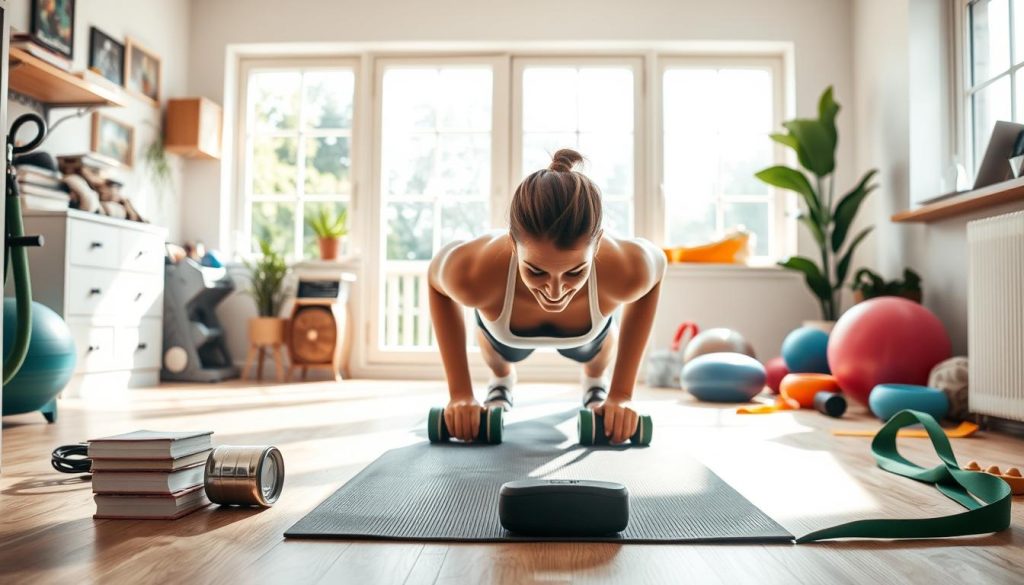
Why Creative Weight Substitutions Matter
Bodyweight exercises provide an excellent foundation for fitness. However, adding resistance through everyday objects allows for progressive overload. This principle is essential for continued muscle growth and strength development over time.
Creative substitutions democratize fitness by removing financial barriers. They make strength training accessible to everyone regardless of economic situation. This approach develops problem-solving skills while saving money on equipment.
Overview of Household Items as Resistance Tools
Common household items offer unique advantages for your training routine. Many containers allow adjustable weight by filling or emptying them. They also provide variety in grip positions and customization based on what’s available.
Resistance training delivers health benefits beyond muscle building. These include improved bone density, better sleep quality, and enhanced cognitive function. As your body adapts to training stimulus, progressively increasing resistance prevents plateaus.
Household Items with Handles for Weighted Exercises
The search for functional weight substitutes often leads to discovering the hidden potential of handled containers around your home. These household items provide the closest experience to traditional equipment while offering adjustable resistance.
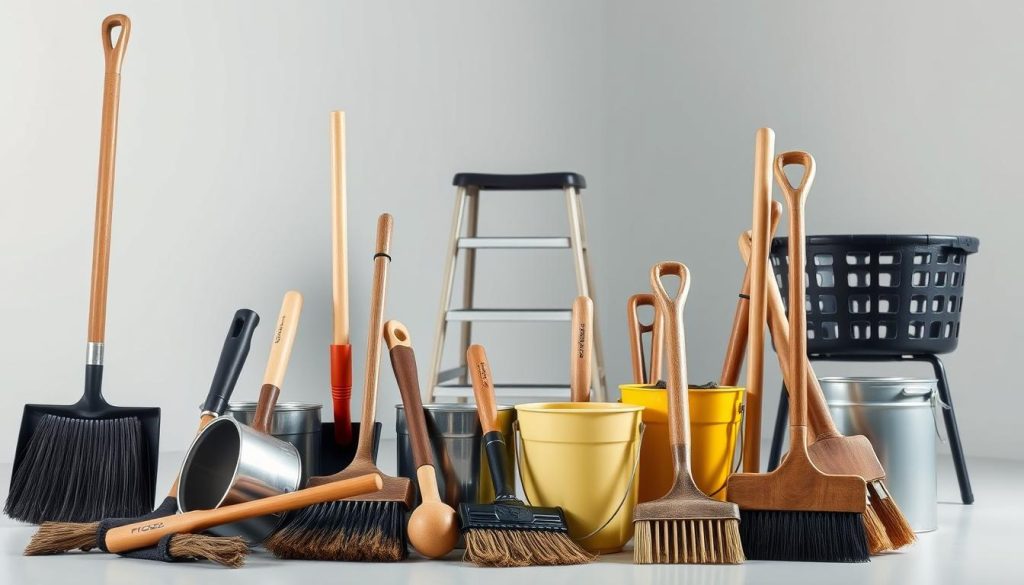
Milk, Juice Gallons, and Water Bottles
Full gallon containers of milk, juice, or water weigh approximately 8-9 pounds. This makes them perfect for intermediate resistance training. You can perform bent-over rows, bicep curls, and farmer’s carries with these versatile jugs.
Smaller cartons around 32 ounces offer about 2 pounds of resistance. They work beautifully for isolation exercises like lateral raises. The variety of water bottles available provides a complete weight range for different needs.
Detergent Bottles, Paint Cans, and Buckets
Laundry detergent containers are exceptionally durable. Large bottles typically weigh 9-10 pounds with sturdy handles designed for heavy loads. Their thick plastic construction withstands intense training sessions.
Paint cans and buckets offer remarkable customization. You can fill them with sand or water to adjust the weight precisely. These items excel for exercises like goblet squats and overhead presses where you need specific resistance levels.
Household Items Without Handles to Intensify Your Routine
Your home contains numerous weight-bearing items that challenge your body in unique ways. Objects without built-in handles engage your grip strength and stabilizer muscles more intensely than traditional equipment. This approach builds functional fitness that translates to real-world activities.
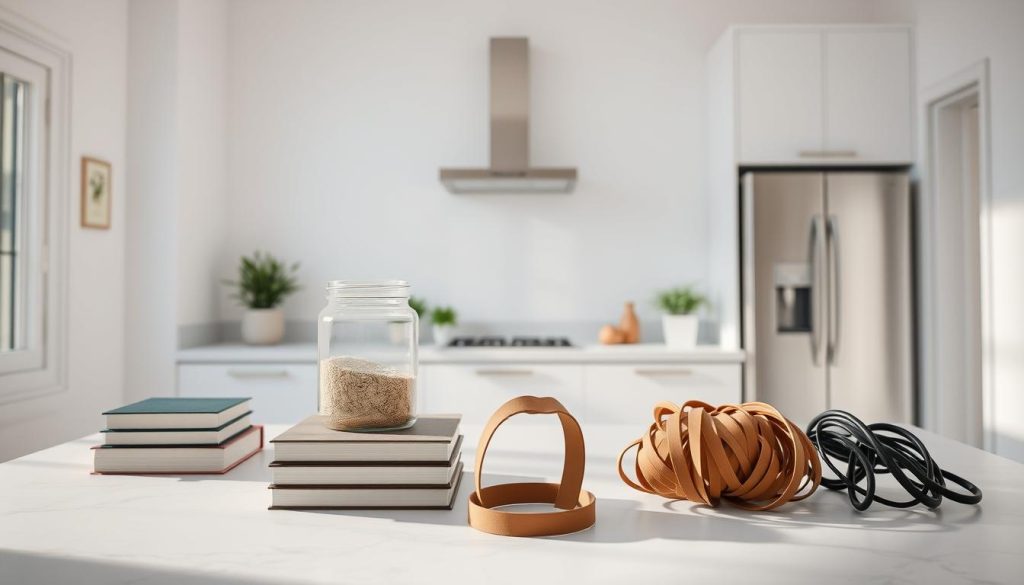
These household items force your muscles to work harder throughout each movement. The lack of comfortable grips means your body must maintain constant control. This develops coordination and core stability simultaneously.
Using Backpacks, Towels, and Books
A standard backpack serves as your ultimate adjustable weight system. Fill it with books, water bottles, or bags of rice to create custom resistance. Wear it during squats, lunges, or push-ups for added intensity.
Food items like bags of flour or potatoes provide perfect resistance for lower body exercises. Hold them against your chest for goblet squats or place them on your shoulders during lunges. Their 3-5 pound weight range works well for various fitness levels.
Large towels create continuous tension during pulling movements. Place the towel under your feet and pull upward to simulate deadlifts. This extended range forces muscles to work through the entire motion.
Cylindrical containers like protein tubs add instability to push-up variations. Place one under each hand to engage more core muscles. Books can be stacked for pressing movements or added to your bag for custom weight combinations.
Suitcases offer exceptional versatility for strength training. Fill them with various things to reach your target resistance. Their awkward shape builds real-world functional strength during bear-hug squats and carries.
dumbbell alternatives at home workout: Creative Uses of Everyday Objects
Your kitchen pantry holds a complete set of adjustable weights waiting to be discovered. By matching specific household items to exact poundage needs, you can create a customized training experience.
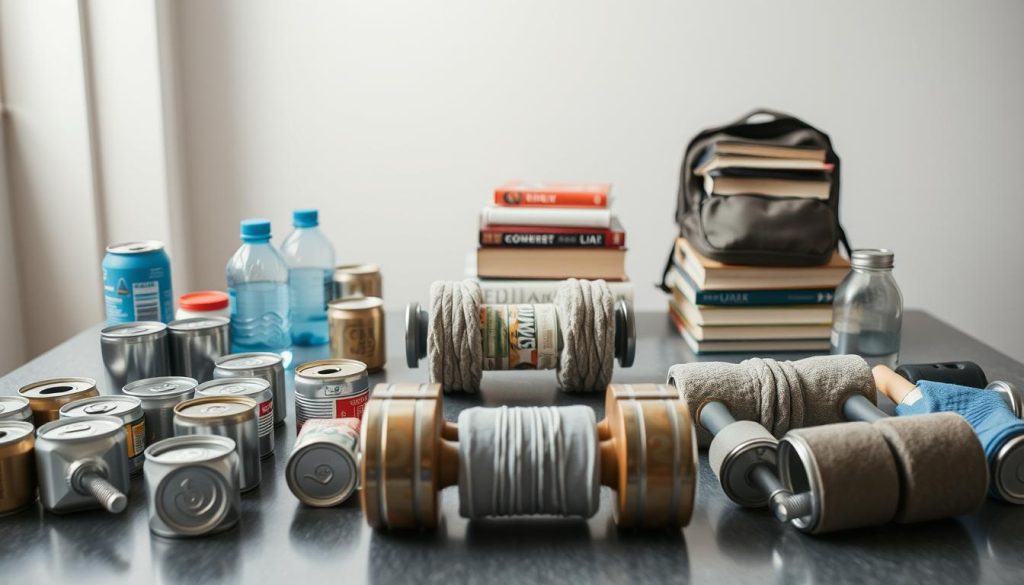
Simple Substitutions for Dumbbells
Canned goods provide the closest feel to traditional dumbbells. Their balanced weight distribution makes them perfect for precise movements. A single can offers about one pound of resistance for exercises like lateral raises.
Small milk cartons deliver approximately two pounds of weight. They work beautifully for curl-and-press combinations. The convenient handles give you secure control during compound movements.
For foundational exercises, large cartons and flour bags provide four to five pounds of resistance. These weights help beginners master proper form in squats and step-ups.
Customizable Weight Options with Household Items
The real power of household training lies in adjustable resistance. A tote bag filled with cans creates perfectly customizable weights. Each can adds one pound, letting you dial in exact resistance levels.
Heavier items like gallon water jugs challenge intermediate exercisers. They provide eight to eleven pounds for more demanding exercises. This progressive approach ensures continuous strength development.
Your creativity becomes your greatest fitness tool. As one trainer noted, “The most effective equipment is often what you already own.” This flexible method means you’re never limited by fixed dumbbell sizes.
Targeted Exercises with Household Weights in Your Home Training
Transform your living space into a complete fitness studio with targeted movements using everyday items. These exercises build functional strength while maximizing your available resources.
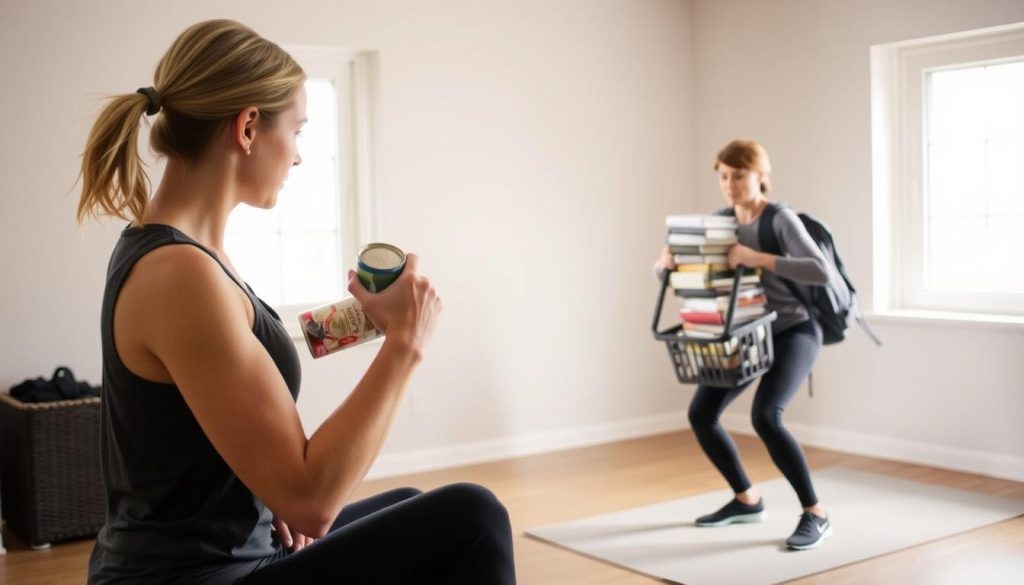
Upper Body Strength: Curls, Rows, and Presses
Develop your upper body with bent-over rows using gallon jugs. Hinge forward at the hips while bracing one hand on stable furniture. Pull the weight to your chest, keeping your arm close to your side.
For tricep development, try kickbacks with canned goods. Stand beside a couch for support, bend your elbow to 90 degrees, then extend your arm straight back. Overhead presses with water bottles effectively target shoulder muscles.
Lower Body Strength: Squats, Lunges, and Step-Ups
Goblet squats work wonders for your legs and glutes. Hold a water bottle at chest level with feet shoulder-width apart. Lower until thighs parallel to the ground, then press through your heels.
Back lunges build lower body strength when holding weights at your sides. Step one foot back and bend your front knee until your back knee nearly touches the ground. Weighted step-ups using stairs develop serious power in your legs.
Core and Stability: Planks and Twists
Russian twists engage your entire core while holding a water bottle. Sit on the floor, lean back slightly, and rotate your torso from side to side. This movement builds rotational strength.
Plank variations create constant tension throughout your abdominal muscles. Standard forearm planks form a straight line from head to heels. Side planks while holding weights overhead challenge your shoulders and obliques simultaneously.
Safety Tips and Guidelines for At-Home Resistance Training
Safety should always be your top priority when creating an effective fitness routine with everyday objects. Taking the time to prepare properly prevents accidents and ensures productive training sessions.
Before starting any exercise, inspect each household item carefully. Check that containers are properly sealed and handles are secure. Look for cracks or weak points that could fail during use.
Choosing the Right Household Item Safely
Always make sure lids are tightly secured, especially during overhead movements. A spill could create dangerous slipping hazards. Start with lighter items even if you feel strong enough for heavier options.
Unusual shapes challenge your stabilizer muscle groups differently. Give your body time to adapt to these new things. This gradual approach builds strength safely.
Best Practices for Preventing Injury
Maintain proper form throughout every movement. Keep your core engaged and spine neutral. Using household items with awkward weight distribution makes it easier to develop poor habits.
When using backpacks or bags, secure all contents so nothing shifts. Sudden weight changes can throw off your balance. Clear adequate space on every side before beginning your training.
Always listen to your body during exercise. Recognize the difference between productive tension and pain signals. Stop immediately if something feels wrong in your hand, foot, or any body part.
Proper warm-up becomes critical when using alternative weights. Your hands and wrists need time to adapt to unusual shapes. Start each session with several minutes of bodyweight movements before adding resistance.
Conclusion
Your fitness journey can begin right where you are with what you already own. This comprehensive list proves that building strength doesn’t require expensive equipment or a fully stocked gym.
Whether using milk jugs or backpacks filled with books, these creative tools provide legitimate resistance. They challenge your body effectively when combined with consistent training and proper technique.
Start today by looking around your space with fresh eyes. Identify items that match your current strength level. Commit to a regular schedule that progressively increases resistance.
Remember that bodyweight exercises also deliver exceptional results. They build functional strength and improve mobility without any gear.
The long-term benefits include financial savings and problem-solving skills. You’ll gain confidence to maintain your routine anywhere life takes you.
Embrace creativity in your approach to fitness. Experiment with different household items to find what works best. Consistency and effort matter far more than perfect gear for achieving your health goals.