


Welcome to your new fitness journey! This guide shows you how to get in great shape without a gym membership or costly gear. All you need is your own motivation and a little bit of free space.
We will walk you through a powerful training method called high-intensity interval training. This approach has become incredibly popular for a good reason. It’s backed by science and praised by fitness enthusiasts everywhere.
You will learn the complete picture. We start with the science explaining why this method works so well. Then, we help you build a personal routine that fits your schedule and current fitness level.
Whether you are just starting out or are looking to maximize your results, this guide is for you. Discover how short bursts of intense effort can deliver better outcomes than long, steady cardio sessions.
By the end, you will feel confident creating effective exercise plans. You can achieve real results, all from the comfort of your living room.
Key Takeaways
- Achieve fitness goals without expensive gym memberships or equipment.
- High-intensity interval training is a scientifically proven method for efficient exercise.
- This approach is suitable for all fitness levels, from beginners to advanced.
- Short, intense sessions can be more effective than longer traditional workouts.
- Learn to create personalized routines that fit your schedule and space.
- Boost your metabolism, burn fat, and build strength simultaneously.
- Gain the knowledge to start an effective fitness program immediately.
Understanding HIIT: What It Is and Why It Works
Let’s dive into the mechanics of high-intensity interval training and discover why it’s so effective. This approach alternates between short bursts of maximum effort and brief recovery periods.
The structure creates a powerful stimulus for improvement. You work hard, then recover, repeating this cycle throughout your session.

The Science Behind Interval Training
High-intensity interval training uniquely challenges both your aerobic and anaerobic energy systems. Traditional steady-state cardio primarily works only one system.
This dual engagement creates superior adaptations. Your body learns to process oxygen more efficiently while building tolerance for intense efforts.
The method produces what scientists call EPOC – excess post-exercise oxygen consumption. This means your metabolism stays elevated for hours after you finish.
A Brief History & Its Rising Popularity
Interval training dates back to 1950 when Olympic champion Emil Zatopek used it in his preparation. However, it gained significant research attention in the 1970s.
The American College of Sports Medicine named HIIT a top worldwide fitness trend in 2014 and 2018. It has remained in the top five trends since 2019.
Studies show this approach improves cardiovascular fitness nearly twice as much as moderate exercise for people with heart conditions. The efficiency makes it perfect for busy schedules while delivering superior results.
Benefits of HIIT Workouts
When it comes to comprehensive health benefits, few training methods compare to intense interval sessions. The advantages extend across multiple areas of physical and mental wellbeing.
Research from leading institutions reveals why these sessions deliver such impressive results. The benefits touch everything from cardiovascular health to metabolic function.

Boosting Cardio and Metabolic Health
Your cardiovascular system receives remarkable improvements from these intense sessions. Studies show significant increases in VO2 max, which measures your body’s oxygen processing capacity.
Metabolic markers show impressive gains too. Research demonstrates better insulin sensitivity and healthier cholesterol levels. Blood pressure improvements are also consistently documented.
Your heart health gets a powerful boost with regular practice. The efficiency gains are substantial compared to traditional moderate exercise.
Burning Fat and Building Muscle Quickly
Fat loss becomes dramatically more effective with this approach. Studies confirm significant reductions in overall body fat and waist circumference.
You simultaneously build and maintain lean muscle tissue. This combination is difficult to achieve with standard cardio alone.
The metabolic afterburn effect means you continue burning calories long after finishing. This maximizes the fat-burning potential of every session while building functional strength.
Equipment-Free HIIT: How No Equipment is Enough
You might be surprised to learn that some of the most effective exercises require zero equipment. Your own body provides all the resistance needed for a challenging session.

Bodyweight movements create natural progressive resistance. As you gain strength, you can perform the same exercises with greater speed and control.
This approach eliminates common barriers to fitness. There’s no cost for gear or need for storage space. You can train anywhere—your living room, a park, or while traveling.
The benefits of equipment-free training include:
- Compound movements that engage multiple muscle groups simultaneously
- Improved body awareness and control through space
- Endless variety to keep your routine fresh and engaging
- A solid foundation for future fitness advancements
Mastering bodyweight exercises first builds essential strength and balance. This foundation serves you well if you later choose to incorporate equipment.
Your body is the most versatile piece of equipment you’ll ever own. It’s always available and perfectly suited to your current fitness level.
HIIT workout at home no equipment: Your Complete Guide
Your workout area setup can significantly impact both your comfort and performance during intense sessions. A well-planned space makes your fitness routine more enjoyable and effective.
Setting Up Your At-Home Workout Space
Creating an effective exercise environment doesn’t require a dedicated room. Just clear about 6 feet by 6 feet of floor space to move freely in all directions.
Consider the area around your workout zone. Move furniture and clear breakable objects for safety. Ensure adequate ceiling height for jumping movements.
Lighting and ventilation matter more than you might realize. Good light helps you monitor form, while proper airflow keeps you comfortable when your heart rate climbs.
Choosing the Right Mat and Surface
Your workout surface affects both comfort and safety. Carpeted floors provide cushioning but less stability. Hard surfaces like hardwood or tile offer stability but need proper matting.
Investing in a quality exercise mat makes a significant difference. It provides cushioning for floor exercises and grip for standing moves. Your joints will thank you during high-impact movements.
Popular mat options include:
- Lions Non-Slip Yoga Mat – budget-friendly at £13
- Pvolve Non-Slip Cushion Exercise Mat – premium comfort at £82
- YOGATI Yoga Mat with Alignment Lines – helpful guides at £23
- Yo Gorilla Mats Premium Large Exercise Mat – spacious 7′ x 4′ surface
Keep water and a towel nearby. Intense sessions generate sweat, and staying hydrated is crucial without interrupting your flow.
Exploring Workout Durations and Intensity Options
Whether you have five minutes or forty, interval sessions can be tailored to fit your available time. This flexibility makes consistent training achievable for everyone.
The duration of your sessions can vary dramatically while still delivering powerful results. Even brief bursts of activity provide genuine benefits.
From 5-Minute Micro-Sessions to 40+-Minute Workouts
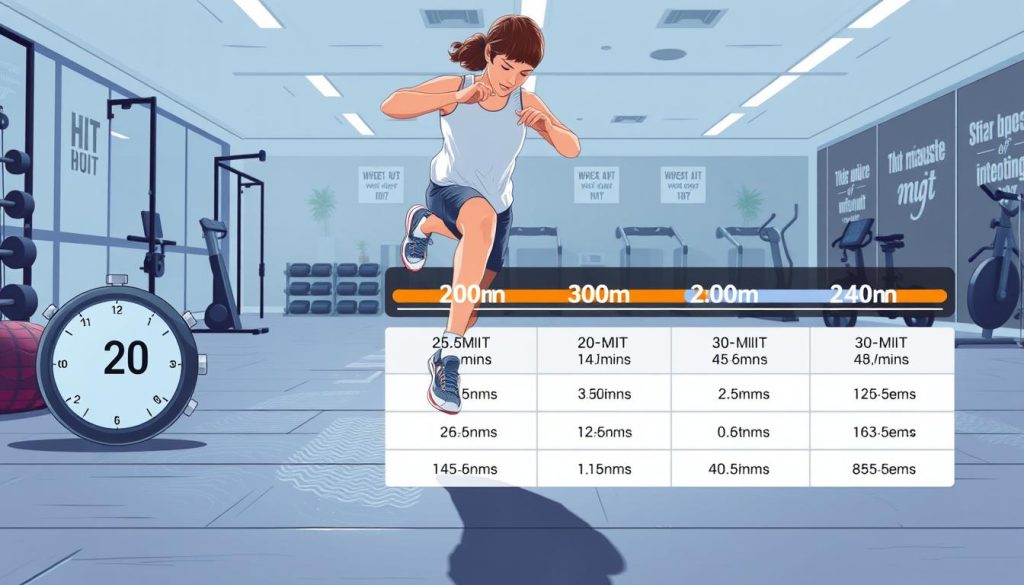
Short sessions demand higher intensity to be effective. If you only exercise for ten minutes, push yourself to 80-90% of your maximum capacity.
The famous Tabata protocol demonstrates this principle perfectly. Dr. Izumi Tabata discovered that four minutes of maximum effort intervals creates better fitness gains than longer moderate sessions.
Common timing structures include:
- 20 seconds work / 10 seconds rest
- 30 seconds work / 15 seconds rest
- 40 seconds work / 20 seconds rest
- 45 seconds work / 20 seconds rest
Longer sessions between 30-40 minutes allow for more variety. You can include additional exercises or slightly longer recovery periods.
Your available time shouldn’t dictate whether you train. Even a five-minute session delivers benefits when performed consistently over time.
High-Intensity Moves to Ignite Your Session
Three powerhouse movements form the core of countless effective training sessions. These fundamental exercises deliver maximum impact with minimal equipment requirements.
Burpees, Mountain Climbers, and Jump Squats Explained
Burpees stand as the ultimate full-body challenge among hiit exercises. This dynamic movement engages your glutes, quads, calves, core, shoulders, chest, and triceps simultaneously.
Begin in a crouch position with hands on the floor. Kick your feet back into a plank, then explosively jump forward and upward. Proper form ensures your chest touches the floor during the plank phase.
Mountain climbers provide intense cardiovascular benefits while building core stability. Start in a high plank position with hands directly beneath your shoulders.
Alternately pump your knees toward your chest while maintaining a stable torso. These exercises develop shoulder endurance and target multiple muscle groups efficiently.
Jump squats transform basic lower body work into explosive power development. Lower into a squat position, then powerfully explode upward through your heels.
Fully extend your legs at the top before landing softly. This plyometric movement builds strength in your glutes, quads, and hamstrings while improving vertical leap.
Each of these exercises offers natural progression options. Beginners can modify intensity while advanced practitioners can increase difficulty. Focus on proper technique before increasing speed.
HIIT Workouts for Beginners
Starting your fitness journey with interval training can feel surprisingly accessible. These sessions are designed to be short and manageable, making them easy to incorporate into daily life.
The psychological advantage is significant. Pushing yourself for just 20 seconds feels achievable compared to longer continuous exercise. This approach removes the intimidation factor many newcomers experience.
Simple Routines and Low-Impact Modifications
Beginner routines typically feature just 4-5 basic moves you can master quickly. This simplicity builds confidence from your very first session.
Modifications make every exercise accessible. Substitute marching for jumping movements and perform half-depth squats instead of full squats. Push-ups from your knees provide the same benefits with less strain.
Start with longer rest periods between exercises. Instead of standard 10-second breaks, beginners might take 20-30 seconds to recover fully. This ensures each work interval maintains proper form.
Listen to your body and go at your own pace. Remember that “high intensity” is relative to your current fitness level. What feels challenging today will become easier as you progress.
Focus on mastering technique before increasing speed. Correct movement patterns prevent injury and ensure you target the right muscles. Begin with 2-3 sessions weekly for optimal adaptation.
Cardio and Strength: Crafting a Full-Body Routine
A well-designed full-body routine brings together the best of both fitness worlds. You get cardiovascular benefits that strengthen your heart while building muscular endurance throughout your entire body.
This approach ensures balanced development across all major muscle groups. Your legs, core, chest, back, and arms all receive equal attention during each session.
Structure your training by alternating between different exercise categories. Move from lower-body movements to upper-body exercises, then incorporate total-body challenges. This strategy distributes fatigue evenly while maintaining intensity.
The efficiency of combining cardio and strength training is remarkable. You accomplish comprehensive conditioning in a single session rather than splitting your efforts. This saves time while delivering superior results.
Always include exercises that target opposing muscle groups for balance. Follow pushing movements with pulling exercises, and pair quad-dominant moves with hamstring-focused actions. This prevents muscular imbalances and reduces injury risk.
Your body composition improves dramatically with full-body training. You maximize calorie burn during activity while building lean tissue that boosts metabolism long after you finish.
Consider organizing your routine in circuit format. Complete one exercise from each category before repeating the sequence. This approach ensures comprehensive coverage while preventing premature muscle fatigue.
Boosting Your Metabolism with Quick HIIT Sessions
The metabolic magic of intense interval training extends far beyond the time you spend actually working out. This approach creates what scientists call EPOC—excess post-exercise oxygen consumption.
Your body continues burning calories at an elevated rate for hours after you finish. This “afterburn effect” can last up to 24 hours following a challenging session.
Strategies for Maximizing Post-Workout Calorie Burn
Push yourself to reach 80-90% of your maximum heart rate during work intervals. This intensity creates the metabolic disturbance needed for extended calorie burning.
Focus on compound movements that engage multiple muscle groups simultaneously. Exercises like burpees and jump squats create greater metabolic demand than isolation moves.
Consistency is key for long-term metabolic improvements. Regular sessions train your body to become more efficient at fat oxidation.
Even brief 10-15 minute sessions can significantly elevate your metabolism. The intensity matters more than the duration for creating this powerful effect.
Keeping It Fresh: Variations and Circuit Ideas
Keeping your training exciting is key to long-term success. Variety prevents both physical plateaus and mental boredom. Your body adapts better when faced with new challenges.
No-repeat sessions offer unique mental focus. You perform each movement only once throughout the entire routine. This approach eliminates familiar patterns that can lead to autopilot exercising.
Circuit-based training organizes exercises into efficient groups. Try five movements performed for 30 seconds each. Follow with 20 seconds of recovery before starting the next round.
The Tabata format provides intense four-minute blocks. It follows 20 seconds of maximum effort with 10 seconds of rest. This structure repeats eight times for powerful results.
Experiment with different timing approaches. Some days use 40 seconds work and 20 seconds rest. Other sessions might focus on repetition-based circuits or AMRAP formats.
Vary your work-to-rest ratios to target different energy systems. Shorter recovery periods build anaerobic capacity. Slightly longer breaks allow for sustained power output.
Create themed routines based on movement patterns or goals. Record your favorite combinations for reliable results. Leave room for experimentation to maintain engagement.
Learning Proper Form and Ensuring Safety
Mastering movement form is the foundation of effective and injury-free training. Proper technique serves as your safety net while maximizing results from every exercise.
During squats, ensure your knees track directly over your toes. Sit back into your hips and keep weight in your heels. This protects your joints while engaging the right muscles.
For burpees, maintain a neutral spine throughout the movement. Your chest should touch the floor during the plank portion. Land softly with bent knees when jumping up to absorb impact.
Mountain climbers require a stable plank position. Keep your hips level throughout the movement. Avoid letting them pike up or sag down, as both compromise core engagement.
With jump squats, landing mechanics matter tremendously. Always land softly with bent knees. Touch down on the balls of your feet first before settling onto your heels.
During floor-based core exercises, keep your lower back pressed firmly into the ground. Engage your abdominal muscles to avoid arching your spine.
Know your limitations and modify exercises that cause pain. Use mirrors or video recordings to check your alignment periodically. Start slowly to learn movement patterns correctly before adding intensity.
Integrating HIIT Into Your Weekly Fitness Schedule
Your body’s adaptation to training happens during recovery periods, not during workouts. This fundamental truth makes scheduling just as important as the exercises themselves. Finding the right balance ensures continuous progress without burnout.
Recommended Frequency and Recovery Tips
Most effective schedules incorporate 2-4 dedicated sessions weekly. The exact number depends on your current fitness level and recovery capacity. Beginners might start with three sessions spread throughout the week.
Rest days are essential for muscle repair and nervous system recovery. Avoid scheduling intense sessions on consecutive days. Your body needs time to adapt to the training stimulus.
A sample beginner schedule could alternate activity and rest days. This pattern allows for adequate recovery while maintaining consistency. As you progress, you might add a fourth session after two weeks.
Watch for signs that your body needs more rest. Difficulty waking up, irritability, or lack of motivation are clear indicators. Persistent minor injuries also signal the need for additional recovery time.
Recovery strategies include 7-9 hours of sleep and proper nutrition. Hydration and active recovery like walking support your body between sessions. Listening to these signals helps optimize your personal schedule for maximum results.
HIIT Through the Ages: From Emil Zatopek to Modern Icons
Emil Zatopek’s revolutionary running methods in 1950 laid the foundation for today’s fitness phenomenon. The Czechoslovakian champion intuitively alternated hard efforts with recovery periods. His approach built superior endurance compared to steady-pace running.
Despite early athletic success, scientific research didn’t begin until the 1970s. Exercise physiologists then systematically studied the mechanisms behind its effectiveness.
The modern explosion occurred in 2014 when this method topped the American College of Sports Medicine’s fitness trends survey. It reclaimed the top position in 2018 and has remained in the top five since 2019.
Today’s landscape includes celebrity practitioners like Beyoncé and Jessica Alba. This demonstrates how the approach transcended athletic circles to become mainstream.
Public interest continues growing with over 12,000 monthly Google searches. The method maintains popularity by delivering consistent results across decades.
What began as an athletic innovation evolved into accessible fitness for everyone. The most effective training doesn’t require expensive facilities or equipment.
Staying Motivated: Tips and Tricks for Consistency
Building lasting fitness habits requires more than just physical effort. Research shows that high-intensity interval training significantly increases exercise adherence. The short duration reduces mental barriers that often prevent people from starting.
The psychological advantage of brief sessions cannot be overstated. Committing to 15-20 minutes feels manageable on busy days. An hour-long gym session might lead to skipping entirely.
Set specific scheduled times in your calendar. Treat them as non-negotiable appointments with yourself. Give your fitness the same priority as important work meetings.
Track progress beyond the scale. Note how many rounds you complete and how impossible exercises become achievable. Improvements in energy levels and sleep quality matter too.
Create a motivating environment by designating a specific area. Cue up energizing music before starting. Eliminate distractions by putting your phone on do-not-disturb mode.
Find accountability through workout buddies or sharing your schedule with family. Reward yourself for consistency milestones after completing two weeks. New clothes or a massage reinforces positive behavior.
Remember that motivation fluctuates naturally. Build discipline that carries you through low-motivation days. Sometimes you just need to start moving and motivation arrives later.
Keep your “why” visible—whether improving health or reducing stress. Remind yourself regularly of deeper reasons beyond superficial goals.
Evolving Your Routine: Advancing as You Grow Stronger
As your strength improves, your routine needs to evolve to keep delivering results. What felt challenging a month ago might now feel comfortable. This signals it’s time to increase the difficulty.
Progression ensures your body continues adapting and improving. Without new challenges, your fitness gains can plateau. The key is advancing safely while maintaining proper form.
Introducing Advanced Moves for Experienced Exercisers
Transform basic movements into more demanding variations. Add a push-up to your burpees or try chest-to-floor versions. These small changes significantly increase the challenge.
For lower body development, replace static lunges with explosive plyometric versions. Try switching legs mid-air during jump lunges. This builds power while maintaining cardiovascular benefits.
Upper body progressions include uneven push-ups and T-rotations. Core work advances with longer plank holds and leg lifts during side planks. Each variation targets muscles in new ways.
Scaling Intensity Without Compromising Form
Increase difficulty gradually by changing one variable at a time. Add advanced exercises but keep your current rest periods. Or reduce rest time while using familiar movements.
Consider adding light weights once bodyweight exercises become easy. Even small dumbbells during jump squats or lunges create new challenges. Always prioritize technique over speed or weight.
Reassess your abilities every few weeks. Note improvements in repetitions or how you feel during sessions. Progress isn’t linear—adjust based on your recovery and energy levels.
Conclusion
You’re now equipped with a powerful toolkit for transforming your fitness journey. The science-backed approach we’ve explored delivers remarkable results efficiently.
Remember that showing up consistently matters most. Three brief sessions weekly will build momentum better than occasional long efforts.
Your body adapts beautifully when challenged properly. Trust the process and listen to your signals for optimal progress.
Every small victory counts—from mastering basic moves to completing longer routines. This journey proves what commitment can achieve.
Start today with confidence, knowing you have everything needed for success right where you are.