

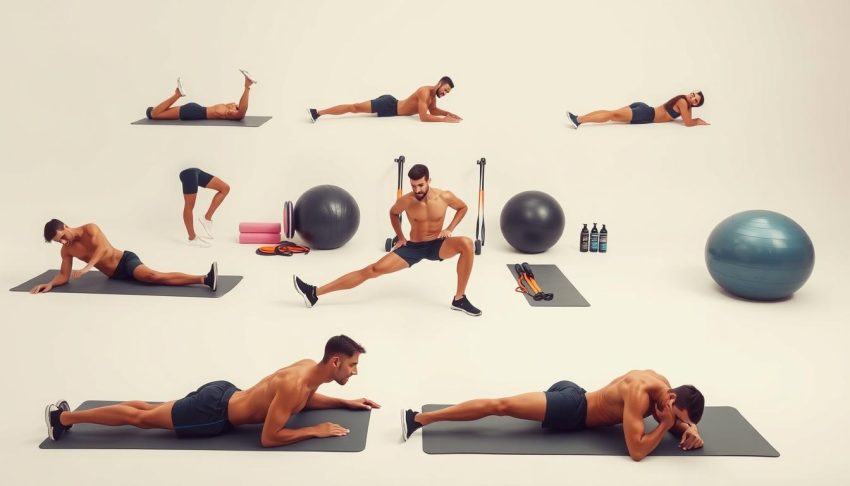
Welcome to your journey toward a stronger, more defined midsection! Many people dream of achieving visible abdominal muscles, but it takes more than just wishful thinking.
This comprehensive guide provides a proven approach that combines effective movements with smart training principles. You’ll discover exercises curated from trusted fitness sources to maximize your efforts.
Remember that a chiseled core isn’t just about appearance. It represents functional strength that supports your entire body during daily activities and other physical pursuits.
Whether you’re beginning your fitness journey or looking to enhance your current regimen, this plan adapts to various experience levels. Consistency, proper nutrition, and adequate recovery all play crucial roles in your success.
Let’s build that powerful core together – you’ve got this!
Key Takeaways
- Achieving visible abs requires consistent effort and proper technique
- Core strength benefits overall body function and fitness performance
- This routine adapts to different experience levels and capabilities
- Nutrition and recovery are equally important as the exercises themselves
- The program incorporates proven movements from reputable fitness sources
- Visible results come from combining multiple healthy habits
- Proper form matters more than quantity of repetitions
Why a Strong Core Matters Beyond Aesthetics
What if I told you that your core’s most valuable contributions happen where no one can see them?
That solid center does more than create an impressive silhouette. It serves as your body’s fundamental power source for everything from heavy lifts to simple daily tasks.
When you perform compound movements like deadlifts or squats, your core provides essential stability. This foundation allows you to handle heavier weights safely while maintaining proper form.
Your abdominal muscles also play a crucial protective role. They shield internal organs and support your spine during bending, twisting, or even sudden movements like sneezing.
“A strong core is the foundation upon which all movement is built, not just a cosmetic feature.”
Spinal health benefits tremendously from developed core strength. The muscles surrounding your spine work together to reduce injury risk during physical activities.
True core training involves more than just surface muscles. It engages deeper stabilizers like the transverse abdominis and supporting muscles including glutes and spinal erectors.
This comprehensive approach builds balanced stability throughout your entire midsection. The result is improved athleticism and functional strength that serves you in countless ways.
Think of your core as your body’s central command center. Whether you’re playing sports, lifting groceries, or playing with kids, that foundation supports you.
Embrace core development as a essential component of your fitness journey. The benefits extend far beyond what meets the eye!
Understanding Your Abdominal Muscles
Getting to know your core anatomy is the first step toward effective training. Your midsection contains several distinct muscle groups that work together beautifully.
Each of these muscles serves specific purposes beyond just creating visual appeal. Understanding their functions helps you target them more effectively during your sessions.
Rectus Abdominis: The Six-Pack Muscle
The rectus abdominis runs vertically along your abdomen. This is the muscle responsible for that coveted six-pack appearance everyone recognizes.
It helps flex your spine during movements like crunches. Strong development here contributes to overall core strength and definition.
Obliques: For Rotation and Stability
Your oblique muscles sit on the sides of your abdomen. They play a crucial role in rotation and lateral stability.
These obliques activate during twisting movements and side bends. They provide essential support for your entire body during dynamic activities.
Transverse Abdominis: The Deep Core Stabilizer
The transverse abdominis acts like your body’s natural weight belt. This deep muscle wraps around your midsection, providing incredible stability.
It supports your spine and internal organs during various movements. Engaging this muscle properly enhances your overall core function and protection.
All these muscles work together to create balanced development. Understanding their individual roles helps you appreciate your abs‘ true capabilities.
This knowledge transforms how you approach your training sessions. You’ll develop not just visible abs but functional power that serves you in daily life.
Essential Principles of an Effective Abs Workout Routine
Building a powerful midsection requires more than just random movements – it demands strategic principles. These foundational concepts separate productive sessions from wasted time.
- Consistency – Regular sessions build lasting results
- Progressive overload – Gradually increasing difficulty stimulates growth
- Proper form – Quality movements prevent injury and maximize engagement
- Strategic progression – Evolving your approach over time
Training to muscle failure creates powerful stimulation for development. Push each set until you cannot complete another rep with good form.
Minimize rest between exercises to maintain intensity. This approach boosts calorie burn while keeping your heart rate elevated.
Tailor your approach to your current fitness level. Begin with simpler movements and gradually increase complexity over 12 weeks.
Incorporate resistance training for enhanced development. Weights challenge your muscles beyond bodyweight capabilities.
Avoid overworking oblique muscles unnecessarily. Balanced development creates aesthetic proportions without widening your waistline.
Focus on quality over quantity during every session. Controlled, purposeful movements deliver better results than rushed repetitions.
Remember that effective training combines these principles. Your consistency with proper technique creates visible transformation.
The Magnificent 7 Ab Circuit for Advanced Trainers
Ready to challenge your midsection with a powerful sequence? This seven-exercise circuit delivers maximum engagement through strategic movement patterns.
Perform each exercise for 12-15 reps with perfect form. Complete all seven movements back-to-back without resting between them.
Take a two-minute break after finishing the entire circuit. Repeat this pattern for three total rounds.
Sit-ups for Upper Abs
Lie on your back with knees bent and feet flat. Place your hands behind your head without pulling on your neck.
Engage your core to lift your upper torso toward your knees. Lower back down with control to complete one rep.
Lying Leg Raises for Lower Abs
Lie flat on your back with legs extended. Place your hands under your glutes for support.
Slowly raise your legs toward the ceiling while keeping them straight. Lower them back down without touching the floor.
V-ups for Full Core Engagement
Begin lying flat with arms extended overhead. Simultaneously lift your legs and upper torso to form a V shape.
Reach your hands toward your toes at the top position. Lower back to the starting position with control.
Seated Leg Tucks for Lower Abs
Sit on the floor with knees bent and feet lifted. Lean back slightly while maintaining balance.
Bring your knees toward your chest while engaging your lower abs. Extend your legs back out without touching the floor.
Toe Touches for Coordination and Strength
Lie on your back with legs extended toward the ceiling. Reach upward with both hands toward your toes.
Lift your shoulders off the ground as you touch your feet. Lower back down with control for each repetition.
Crunches for Upper Ab Definition
Lie on your back with knees bent and feet flat. Cross your hands over your chest or place them behind your head.
Lift your shoulders off the ground while keeping your lower back pressed down. Focus on squeezing your upper abdominal muscles.
Reverse Crunches for Comprehensive Core Work
Lie on your back with knees bent at 90 degrees. Place your hands flat on the floor beside you.
Use your lower abs to lift your hips off the ground. Bring your knees toward your chest in a controlled movement.
New to circuit training? Start with just three exercises and two sets. Gradually add more movements as your strength improves.
Perform this sequence three times weekly for best results. Remember: quality repetitions matter more than rushing through the motions!
Beginner-Friendly Abs Exercises to Build Foundation
Starting your fitness journey requires smart choices that build strength safely. These foundational movements create the stability needed for more advanced training later.
Focus on perfecting your form before increasing difficulty. Quality repetitions matter more than quantity when building your base.
Planks for Core Stability
Planks develop incredible bracing strength throughout your entire midsection. This exercise teaches your body to maintain proper alignment under tension.
Begin on the floor with elbows under your shoulders. Keep your body in a straight line from head to heels.
Engage your glutes and maintain neutral neck position. Hold for 30-60 seconds per set.
Complete four sets with brief rest between each. Increase your hold time as your strength improves.
Mountain Climbers for Dynamic Movement
Mountain climbers add athletic dynamism to your routine. This movement builds core endurance while elevating your heart rate.
Start in a high plank position with shoulders over hands. Drive your knees toward your chest in alternating fashion.
Maintain a steady rhythm for 30-second intervals. Perform 3-4 reps with controlled movement.
Keep your hips level throughout the exercise. This prevents strain and maximizes engagement.
Bird Dogs for Balance and Control
Bird dogs enhance stability through coordinated movement. This exercise improves balance while strengthening deep core muscles.
Begin on all fours with hands under shoulders. Slowly extend your right arm and left leg simultaneously.
Keep both limbs parallel to the ground. Return to starting position with control.
Complete 8 repetitions per side for 3-4 sets. Focus on slow, deliberate movements for best results.
Incorporate these exercises 2-3 times weekly for steady progress. Remember that consistency builds the foundation for visible results!
Incorporating Equipment for Enhanced Abs Training
Ready to take your midsection training to the next level? Adding simple equipment can dramatically increase intensity and results.
These tools create new challenges that bodyweight alone cannot match. They develop functional strength while building impressive definition.

Always prioritize proper form over heavy weight. Control each movement to maximize engagement and prevent strain.
These exercises work best for intermediate and advanced trainees. Start with lighter resistance and perfect your technique first.
Using an Ab Wheel for Anti-Extension
The ab wheel challenges your core‘s ability to resist extension. This advanced exercise requires tremendous bracing strength.
Kneel on the ground holding the wheel with both arms. Keep your back rounded as you roll forward slowly.
Go only as far as you can maintain control. Use your abdominal muscles to pull back to the starting position.
Perform 3 sets of 6-10 reps with perfect form. This movement builds incredible core stability and control.
Kettlebell Windmills for Mobility and Strength
Kettlebell windmills enhance shoulder mobility while strengthening obliques. This dynamic exercise improves overall functional fitness.
Stand with feet wider than shoulder-width apart. Press a kettlebell overhead with one arm while keeping it locked.
Slowly hinge at your hips and rotate toward the opposite side. Keep your eyes on the weight throughout the movement.
Complete 3 sets of 6-8 reps per side. This develops rotational strength and improves shoulder stability.
Cable Crunches for Added Resistance
Cable crunches provide consistent tension throughout the entire range of motion. This added resistance promotes muscle growth effectively.
Kneel facing a cable machine with rope attachment pulled down. Hinge at your hips while keeping your shoulders stable.
Contract your abdominal muscles to crunch downward toward the floor. Focus on bringing your chest toward your thighs.
Perform 3 sets with progressive holds at the peak contraction. Control the negative portion of each repetition for maximum benefit.
Incorporate these equipment-based exercises 1-2 times weekly alongside your regular routine. They provide valuable variety while challenging your muscles in new ways.
Remember that quality always beats quantity when using equipment. Perfect your form before increasing weight or repetitions.
These tools can accelerate your progress when used correctly. They transform good training into great results!
The 300 Rep Challenge: Beginner and Advanced Versions
Ready to test your endurance with a fun fitness challenge? The 300-rep session pushes your limits while building incredible core stamina.
This high-volume approach develops muscular endurance through strategic movement patterns. You’ll target your entire midsection from multiple angles.
Both versions follow the same basic structure with eight different movements. The advanced edition incorporates weights for added intensity.
Complete all repetitions with minimal rest between exercises. Focus on maintaining perfect form throughout the entire sequence.
Beginner 300 Workout Structure
Start with bodyweight movements to build your foundation safely. This version develops control and endurance without equipment.
The sequence includes fifty sit-up reach ups for upper engagement. Perform twenty-five side crunches per side for oblique development.
Seated Russian twists complete fifty reps for rotational strength. Add wiper planks and other bodyweight movements to reach three hundred total.
Take short breaks only when absolutely necessary. The goal is continuous movement with controlled pacing.
Advanced 300 Workout with Weights
Progress to weighted variations as your strength improves. Barbells and dumbbells increase resistance for greater challenge.
Overhead jammers replace standard crunches for added intensity. Oblique rollouts with weights engage your side muscles more deeply.
Maintain the same rep counts as the beginner version. The extra resistance makes each movement more demanding.
Use lighter weights initially to perfect your form. Gradually increase load as you become more comfortable with the movements.
Perform this challenge two to three times weekly for best results. Allow at least one day of recovery between sessions.
Listen to your body and adjust repetitions if needed. Quality movement always outweighs quantity in the long run.
This comprehensive approach targets obliques, upper, and lower regions effectively. It builds endurance while promoting muscular development.
Progress from beginner to advanced as your fitness level improves. The weighted version offers continued challenge for experienced trainees.
Remember that proper form remains your top priority throughout. Control each repetition to maximize engagement and prevent strain.
Embrace this challenge as a rewarding test of your dedication. You’ll build not just strength but incredible mental toughness too!
How to Structure Your Weekly Abs Training
Strategic scheduling separates occasional effort from consistent progress. Your training plan determines how effectively you develop strength and definition.
Most people achieve excellent results with three weekly sessions. This frequency allows for muscle recovery while maintaining steady development.
You can integrate core exercises with other activities smartly. Many prefer morning abdominal work followed by afternoon weight training for metabolic benefits.
Consider these effective scheduling approaches:
- Pre-workout activation: Light core engagement before weight training
- Post-workout focus: Dedicated abdominal work after main exercises
- Separate sessions: Complete core training at different times of day
Advanced trainees might train more frequently, even daily. Listen to your body’s signals to avoid overtraining and ensure proper recovery.
A sample week could look like this:
Monday: Focus on upper abdominal exercises
Wednesday: Lower core emphasis with rotational movements
Friday: Full core integration with compound exercises
Balance your abdominal work with other muscle group training. This creates well-rounded fitness while supporting overall strength development.
Consistency matters more than perfection. Stick to your scheduled days even if you need to adjust intensity occasionally.
Gradually increase difficulty over several weeks. Add more reps, harder variations, or incorporate equipment as you progress.
Align your training schedule with personal goals. Strength development might emphasize different exercises than aesthetic-focused programs.
Remember that sustainable routines create lasting results. Find a weekly pattern that fits your lifestyle and keeps you motivated!
Common Mistakes to Avoid for Optimal Results
Even the best training plan can be undermined by simple errors. Recognizing these common pitfalls helps you maximize your efforts safely.
Many people rush through their repetitions using momentum instead of muscle control. This reduces effectiveness and increases injury risk significantly.

Focus on quality movement rather than speed. Each repetition should feel intentional and controlled from start to finish.
Form errors frequently occur during core exercises. People often arch their back during planks or crunches, reducing engagement.
Maintain a neutral spine position throughout each movement. This protects your back while ensuring proper muscle activation.
Overtraining specific muscles can create imbalance. Focusing too much on oblique exercises might lead to unnecessary width development.
Balance your training across all abdominal regions. This creates proportional development and functional strength.
Jumping into advanced routines without foundation often leads to frustration. Build your strength gradually through proper progression.
If you experience lower back strain, substitute problematic movements. Choose alternatives that target the same muscles without discomfort.
Record yourself occasionally to check your form. Sometimes we don’t realize our mistakes until we see them visually.
Seek guidance from qualified trainers if possible. They can provide immediate feedback on your technique.
Develop a strong mind-muscle connection during each session. Feel your abdominal muscles working through every repetition.
Return to your starting position with control after each movement. Don’t just collapse between reps.
Keep your knees properly aligned during leg-intensive exercises. This protects your joints while maximizing engagement.
Your legs should move with purpose during core movements. Avoid swinging them randomly during exercises.
Maintain proper chest position during various exercises. Don’t let your shoulders round forward excessively.
Patience and consistency always beat aggressive pushing. Sustainable progress comes from steady improvement over time.
Remember that proper form matters more than any other factor. It transforms good workout sessions into great results!
Nutrition and Recovery: Supporting Your Abs Journey
Your kitchen habits play just as important a role as your training efforts. What you eat and how you recover determines whether those hard-earned muscles become visible.
A balanced approach to nutrition fuels your body while promoting definition. Think of food as both energy source and building material for your transformation.
Creating visible definition requires smart calorie management. You’ll want to maintain a slight deficit or balance your intake with output.
Focus on lean proteins like chicken, fish, and plant-based options. These support muscle repair after your sessions.
Healthy fats from avocados, nuts, and olive oil provide sustained energy. Complex carbohydrates fuel your workouts and daily activities.
Timing matters when it comes to refueling. Try to consume protein within an hour after your training.
This window maximizes recovery and strength development. Your muscles are most receptive to nutrients during this time.
Hydration impacts every aspect of your fitness journey. Water supports metabolic function and helps transport nutrients.
Aim for at least eight glasses throughout your day. Add more during intense training periods or hot weather.
Sleep might be your most powerful recovery tool. Your body repairs and builds muscle during restful nights.
Target seven to nine hours of quality sleep each night. This supports both physical recovery and mental focus.
Practical nutrition tips make consistency easier:
- Plan meals ahead to avoid poor choices when hungry
- Choose whole foods over processed options
- Include colorful vegetables for micronutrients
- Limit added sugars and refined carbohydrates
Supplements can support but shouldn’t replace real food. Whey protein offers convenience after training sessions.
Remember that foundation comes from balanced nutrition. Supplements simply complement your already healthy diet.
Balance activity with proper rest throughout your week. Your muscles grow during recovery, not during training itself.
Incorporate light activities on your off days. Walking or gentle stretching promotes circulation without overtaxing your system.
Listen to your body’s signals for optimal results. If you feel overly fatigued, consider an extra recovery day.
This approach prevents overtraining while maintaining progress. Sustainable habits create lasting transformation.
Your dedication in the kitchen supports your efforts in the gym. Together, they create the visible results you’re working toward!
Conclusion: Committing to Your Core Strength Goals
You now have all the tools for building a stronger, more defined midsection. Remember that consistency in your training and smart nutrition choices are essential.
Start with beginner exercises if you’re new to fitness. Progress to advanced routines like the Magnificent 7 circuit as your strength improves.
A powerful core benefits your entire body beyond appearance. It supports overall health and enhances athletic performance.
Set realistic goals and track progress each week. Revisit previous sections whenever you need guidance.
Results take time, but dedication pays off. Your journey toward a stronger midsection starts today!