

Think a strong core is just about getting a six-pack? Think again. Your abdominal muscles do much more than look good at the beach.
These muscles support your entire body. They help with bending, twisting, and turning. They also protect your organs and keep your spine stable.
Many people stick to basic sit-ups. But a well-rounded routine targets all your core muscles. This approach builds real strength and definition.
We’ve put together a list of favorite moves. These will help you build a dynamic, bulletproof core. You’ll see improvements in your athletic performance and daily life.
Let’s make core training a fun and rewarding part of your fitness journey. Your body will thank you!
Key Takeaways
- A strong core supports daily movements and protects your spine.
- Basic sit-ups alone aren’t enough for complete core development.
- Targeting all abdominal muscles improves both strength and appearance.
- A strong core enhances performance in compound lifts and athletics.
- Consistent core training benefits overall health and functional fitness.
Why a Strong Core is About More Than Just a Six-Pack
Your core’s real value isn’t in how it looks but in how it performs. This powerful muscle group acts as your body’s natural weight belt.
A robust core transforms your heavy lifts. It provides essential stability during squats, deadlifts, and overhead presses. This foundation lets you move more weight safely.
These muscles work constantly, even when you don’t notice. They assist with bending, twisting, and turning movements. Your core even helps protect organs during sneezing or coughing.
Core training isn’t just about aesthetics. It’s about building a protective shield for your spine. This support reduces injury risk during workouts and daily activities.
Many focus only on sit-ups for visible abs. A balanced approach targets all core muscles. This builds true functional strength that serves you everywhere.
The benefits extend far beyond the gym. A strong core improves posture, athletic performance, and everyday movement quality. These long-term gains make life easier and more active.
Your core connects upper and lower body strength. It transfers power efficiently during sports and compound movements. This integration makes you better at everything you do.
Understanding Your Core: It’s More Than Just Abs
Your midsection contains a complex network of muscles working together for stability and movement. Knowing what’s happening beneath the surface helps you train smarter and build true functional strength.
The Key Muscles of Your Midsection
Your abdominal region consists of four main muscle groups. Each plays a unique role in how your body moves and functions.
The rectus abdominis runs vertically down your front. This is the muscle people call the “six-pack.” It helps with bending forward and stabilizing your torso.
Your external obliques sit on either side of your waist. They create that desirable V-shape appearance. These muscles assist with twisting and side bending movements.
Beneath them lie the internal obliques. They work opposite to the external obliques during rotation. Together, they form a powerful twisting mechanism.
The deepest layer is the transversus abdominis. Think of it as your body’s natural corset. This muscle pulls everything inward and provides crucial spinal support.
Core vs. Abs: What’s the Difference?
Many people use these terms interchangeably, but they mean different things. Your abs refer specifically to those four abdominal muscles.
Your core includes everything in your trunk region. This means your abs plus your lower back muscles, glutes, diaphragm, and pelvic floor. It’s your body’s central support system.
Fitness expert Ebenezer Samuel explains why this distinction matters. A balanced core engages your back extensors and glutes for full-body stability. This comprehensive approach prevents injuries and enhances athletic performance.
Understanding this anatomy helps you create better workouts. You can target all areas effectively. This prevents muscle imbalances and builds comprehensive strength.
True core training involves more than just abdominal work. It includes movements that challenge your entire trunk system. This holistic approach delivers real functional benefits for daily life and sports.
The Ultimate List of the Best Exercises for Abs
Ready to transform your core training with moves that deliver real results? The American Council on Exercise ranks bicycle crunches as the top abdominal movement. This highlights how effective movements go beyond basic crunches.
A well-rounded routine targets your core from multiple angles. It should include varied planes of motion and training styles. This approach builds comprehensive strength throughout your entire midsection.
Your training should challenge different aspects of core function. Focus on movements that test anti-extension, rotation, and stability. These elements create a balanced, functional midsection.
Bicycle crunches stand out for their effectiveness. They work well for beginners and home workouts. This movement engages multiple muscle groups simultaneously.
We’ve curated a diverse selection of top movements. The list includes both bodyweight and weighted options. This versatility lets you progress as your strength improves.
Training with different angles and tempos builds a complete core. Varying your rep ranges develops both endurance and power. This comprehensive approach creates defined obliques and a strong midline.
Upcoming sections break these movements into categories. You’ll find options for different difficulty levels and equipment availability. This helps you choose the right exercises for your current goals and setup.
Whether you’re starting out or looking to advance, there’s something for everyone. The right selection can transform your core training experience. Get ready to build strength that serves you in every movement.
Bodyweight Basics: No-Equipment Core Crushers
Building a powerful core doesn’t require fancy equipment or gym memberships. Your own body weight provides excellent resistance for developing functional strength. These movements build stability that translates directly to real-world activities.
Bodyweight training offers incredible versatility for developing abdominal strength. You can perform these movements anywhere – at home, in a park, or during travel. This accessibility makes consistent training easier to maintain.
The Perfect Plank
Start face down on your mat with elbows directly under your shoulders. Extend your legs straight back, resting on the balls of your feet. Keep your body in one straight line from head to heels.
Actively squeeze your glutes and brace your core muscles. Maintain this position for 30 seconds to one minute. Complete four sets with brief rest periods between each hold.
This static hold develops incredible core bracing ability. It teaches your body to maintain spinal alignment under tension. This skill transfers to heavy lifts and daily activities.
Mountain Climbers
Begin in a high plank position with hands under your shoulders. Keep your core engaged and your body straight. Drive one knee toward your chest, then quickly switch legs.
Maintain a steady rhythm while keeping your hips stable. Perform this movement for 30-second intervals. Complete three to four sets with short rest periods.
This dynamic exercise adds athleticism to your routine. It challenges core stability while incorporating cardiovascular elements. The alternating movement pattern improves coordination.
Hollow Hold
Lie on your back with arms extended overhead and legs straight. Lift your shoulders and feet slightly off the ground. Create a slight “banana” shape with your body.
Squeeze your abdominal muscles to maintain this position. Hold for 45 seconds to one minute per round. Complete three to four rounds with adequate rest.
This movement builds serious core strength and endurance. It teaches total abdominal engagement without spinal flexion. The hollow position develops tension throughout your entire midsection.
Bird Dog
Start on all fours with hands under shoulders and knees under hips. Extend one arm straight forward while extending the opposite leg straight back. Keep both parallel to the ground.
Focus on balance and stability throughout the movement. Hold each extension for a brief moment before returning. Perform eight repetitions per side for three to four sets.
This exercise dramatically improves stability and coordination. It challenges your core to resist rotation while maintaining balance. The contralateral movement pattern enhances neural connections.
Russian Twist
Sit on the ground with knees bent and feet lifted slightly. Lean back until you feel your core engage. Rotate your torso from side to side in a controlled manner.
Keep your movement smooth and avoid using momentum. Complete 15 to 20 repetitions per set. Perform three sets with focused attention on form.
This rotational movement engages your oblique muscles effectively. It develops the twisting strength needed for many sports and activities. The constant tension builds muscular endurance through your entire midsection.
Level Up: Advanced Bodyweight Movements
Ready to challenge your midsection with moves that truly test your limits? These advanced bodyweight movements take core training to the next level. They build serious strength without needing any equipment.
Mastering these skills develops impressive control throughout your entire trunk. You’ll notice improvements in sports performance and heavy lifting. The benefits extend far beyond visible muscle development.
Side Plank Variations
Lie on your side with your legs extended straight. Prop yourself up on your forearm, keeping your elbow under your shoulder. Raise your hips until your body forms a straight line from head to feet.
Hold this position for 40 seconds per side. Complete three rounds with brief rest periods. This exercise specifically targets your oblique muscles along your sides.
Increase difficulty by adding elevation or rotation movements. Lift your top arm toward the ceiling for extra challenge. These variations dramatically improve anti-lateral flexion strength.
Hanging Leg Raises
Grab a pull-up bar with both hands using an overhand grip. Keep your shoulders engaged and your body stable. Bend your knees slightly and curl your legs upward using your abdominal muscles.
Lower your legs back down with controlled tension. Perform 8-12 repetitions for three sets. This movement challenges your core contraction from a hanging position.
Proper form prevents swinging and maximizes effectiveness. Focus on shoulder stability and grip strength throughout. This exercise builds serious lower abdominal development.
L-Sit Progression
Support your body weight on your hands with arms straight. Lift your legs straight out in front of your body. Hold your entire body in a perfect L-shape position.
Work up to longer holds as your strength improves. Practice this progression 1-2 times weekly. This skill demonstrates impressive core strength and control.
Start with bent knees if the full position feels too challenging. Gradually straighten your legs as you gain strength. Consistent practice leads to mastery over time.
These advanced movements increase core endurance and overall stability. They benefit sports performance and heavy compound lifts. Always prioritize proper form to avoid injury and maximize results.
Adding Resistance: Weighted Ab Exercises for Strength
When bodyweight movements become too easy, it’s time to add resistance to your core training. Weighted movements build serious strength throughout your entire midsection.
These exercises allow progressive overload, just like other muscle groups. You can use cables, kettlebells, or resistance bands. This approach develops both size and functional power.

Cable Crunch
Kneel facing away from the cable machine with a rope attachment. Grab the ends and position your hands near your temples. Your knees should be hip-width apart on the mat.
Crunch downward, bringing your elbows toward your thighs. Hold at the bottom for five seconds. Slowly return to the starting position with control.
Perform three sets with increasing hold times. This builds serious abdominal size and strength. Focus on squeezing your muscles throughout each repetition.
Pallof Press
Kneel sideways to the cable machine with both knees on the ground. Grab the handle with both hands at chest level. Your torso should face forward, not toward the machine.
Press the handle straight out from your chest. Hold this position for two seconds. Your core must brace against the pulling force.
Complete eight repetitions per side for three sets. This movement trains anti-rotation and core unity. It teaches your body to resist unwanted twisting.
Ab Wheel Rollout
Kneel on the ground with wide knees for stability. Hold the ab wheel with both hands directly under your shoulders. Keep your back slightly rounded to protect your spine.
Roll forward as far as you can while maintaining tension. Squeeze your abs hard to pull yourself back. Don’t let your hips sag toward the floor.
Perform six to ten repetitions for three sets. This challenges anti-extension and shoulder stability. It’s one of the most demanding bodyweight exercises for your core.
Half-Kneeling Kettlebell Windmill
Start in a half-kneeling position with one knee down. Press a kettlebell overhead with your opposite arm. Keep your eyes on the weight throughout the movement.
Rotate your torso and lower your free hand toward the ground. Maintain a tight brace throughout your core. Return to the starting position with control.
Complete six to eight repetitions per side for three sets. This improves bracing, shoulder mobility, and rotation. It combines multiple benefits into one powerful movement.
Weighted exercises transform your core development. They allow progressive overload that bodyweight movements can’t match. Your strength gains will translate to better performance in all activities.
Dynamic Power: Core Exercises for Athletes
Athletes know that explosive core power separates good performance from great performance. Dynamic movements build the rotational strength and stability needed for sports. These exercises develop power that transfers directly to your game.
Traditional core work focuses on static holds and controlled movements. Athletic training requires explosive power and rapid force production. This approach builds core strength that serves you during competition.
13. Medicine Ball Slams
Stand with your feet shoulder-width apart on your mat. Hold a medicine ball with both hands at chest level. Squat down slightly, then explode upward using your legs.
Drive the ball overhead with full extension. Slam it down toward the ground with maximum force. Let your entire body engage in this powerful movement.
Perform 30-second intervals of maximum effort slams. Complete four rounds with equal rest periods. This builds full-body power and releases competitive energy.
Medicine ball slams engage your shoulders, arms, and back muscles. They develop explosive power from the ground up. This functional movement improves athletic performance across sports.
14. Cable Woodchop
Set a cable pulley at chest height on your machine. Stand sideways to the machine with your feet planted. Grab the handle with both hands extended.
Pull the handle diagonally across your body with control. Rotate your torso while keeping your hips stable. Return to the starting position with deliberate movement.
Complete 10-12 repetitions per side for three sets. Focus on quality rotation rather than speed. This builds rotational strength for twisting motions.
Sports like tennis, golf, and baseball require powerful rotation. The cable woodchop develops this specific athletic ability. It trains your core to generate and control rotational force.
Incorporate these dynamic moves into high-intensity routines. They provide cardio benefits beyond core endurance. Your athletic performance will improve with consistent practice.
Building Your Ab Workout Routine
Smart programming turns individual movements into transformative routines. Your approach matters just as much as the exercises you choose.
Proper structure ensures balanced development and prevents plateaus. It also keeps your training sustainable long-term.
How Often Should You Train Your Core?
Most people benefit from training their midsection 2-3 times weekly. Sessions can be brief yet highly effective.
Five to fifteen minutes per session delivers excellent results. This frequency allows adequate recovery between workouts.
Overtraining can actually hinder your progress. Your core muscles need time to repair and grow stronger.
Adjust your frequency based on your overall training schedule. Heavy lifting days might require lighter core work. Listen to your body’s signals.
Sample Workout Structures
Circuit training works wonderfully for core development. It maintains intensity while keeping sessions short.
Try selecting three complementary movements. A balanced trio might include a plank, Russian twist, and leg raises.
Perform each movement for 30 seconds. Rest 30 seconds between exercises. Repeat the entire circuit three times.
This structure hits all major core functions efficiently. You’ll develop strength, endurance, and stability simultaneously.
Always balance different movement patterns in your routines. Include flexion, rotation, and anti-movement exercises.
This comprehensive approach prevents muscle imbalances. It builds functional strength that serves you in real life.
You can integrate core work at the end of regular gym sessions. Alternatively, perform it as standalone workouts at home.
Consistency matters more than perfection. Find a schedule you can maintain week after week.
Advanced athletes might train more frequently. Beginners should start with just two weekly sessions.
Your goals determine your ideal training frequency. Competitive athletes often benefit from additional core work.
The Top Benefits of a Strong Core
Your core muscles do more than create visible definition. They serve as your body’s central command center for movement and stability. A strong midsection delivers benefits that improve your daily life and athletic performance.
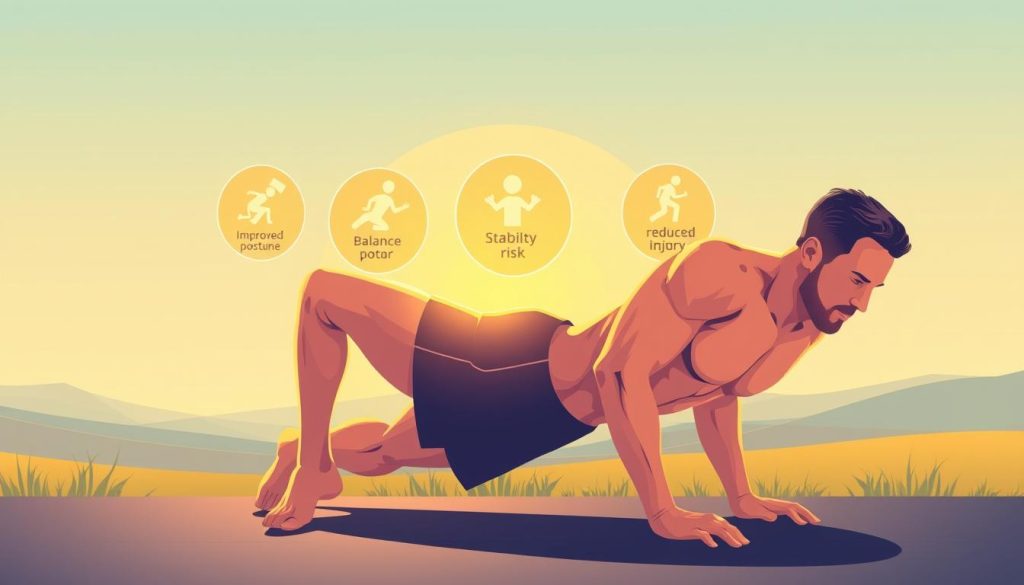
Better balance and coordination rank among the top advantages. Your core engages with every movement you make. This constant activation stimulates your cerebellum and enhances spatial awareness.
You’ll notice improved stability during single-leg movements. Your body becomes more coordinated during complex activities. This makes sports and daily tasks feel more natural.
Enhanced posture represents another significant benefit. A strong core supports your spine throughout the day. This reduces back pain, especially for those with sedentary jobs.
Your shoulders naturally sit back when your core is engaged. Your head aligns properly over your spine. This alignment reduces strain on your neck and back muscles.
Increased power in compound lifts comes from core strength. Movements like deadlifts and squats require solid midline stability. Your core transfers force more efficiently between upper and lower body.
You’ll generate more power during athletic movements too. Throwing, jumping, and running all benefit from core engagement. This translates to better performance in sports and workouts.
Functional improvements extend beyond the gym. Everyday activities become safer and more effective. You’ll move with greater confidence and reduced injury risk.
Core training even benefits brain function and coordination. The mind-body connection strengthens with consistent practice. This contributes to a more active, injury-free lifestyle.
- Better balance through core engagement and cerebellum stimulation
- Improved posture and spinal support reducing back pain
- Increased power transfer during compound movements
- Enhanced performance in sports and daily activities
- Improved brain function and spatial awareness
These benefits work together to create a stronger, more capable you. Your quality of life improves with each core session. The rewards extend far beyond physical appearance.
Essential Equipment for Your Ab Training
Many people believe they need expensive gear to build a strong midsection. This couldn’t be further from the truth. Your own body provides all the resistance needed for effective core development.
Bodyweight movements like planks and mountain climbers deliver fantastic results. These require zero equipment and can be done anywhere. They build functional strength that serves you in daily life.
A simple yoga mat offers comfort during floor work. It cushions your spine and provides grip for your hands. This basic tool makes home workouts more enjoyable.
Optional equipment adds variety and progression to your routine. Dumbbells and kettlebells introduce external resistance. Resistance bands create tension throughout movements.
Advanced tools challenge your core in new ways. Ab rollers test anti-extension strength dramatically. Cable machines enable woodchops and crunches with adjustable weight.
Affordable options make weighted workouts accessible. Hex dumbbells provide stability during movements. Adjustable sets save space in home gyms.
Remember that equipment enhances but isn’t essential. Consistency and proper form matter most. Your dedication determines results more than any gear.
Start with bodyweight movements and progress gradually. Add tools as your strength increases over time. This approach builds sustainable core development.
Conclusion: Your Path to a Bulletproof Core
Your journey to a stronger midsection starts with commitment. Mix up your routine with planks, twists, and leg raises. This variety hits all your core muscles for full development.
Aim for three weekly sessions. Combine bodyweight and weighted moves. This balanced approach builds real strength and endurance.
Core training improves your lifts, sports, and daily activities. It also cuts injury risk. The benefits go far beyond a six-pack.
Stay consistent with your workouts. You’ll gain a resilient midsection and more confidence. Your overall fitness will soar.
Start adding these movements to your routine today. Build a healthier, stronger body from the inside out.